Vintage Farm Bureau Feed Bag Program Bags
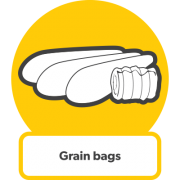
Grain Bags
Follow 3 steps to help ensure your grain bags will be accepted and recycled.
Loosely rolled grain bags weigh very little but a require a lot of space plus they're difficult to manage and they're inefficient to transport for recycling. Please help out by taking 3 steps before you bring them to a collection site.
-
 Remove debris – Grain bags need to be free of as much foreign material (spoilage, dirt, rocks, etc.) as possible. Using a proper grain bag roller will help achieve that objective.
 - Roll – Grain bags need to be rolled tightly with a mechanical grain bag roller* or old hay baler (most grain bag extractors roll the bags too loosely), and then secured tightly with twine. In Alberta, grain bag rollers are available for use in some municipalities. Contact your local collection site to enquire if a grain bag roller is available.
- Return – Contact your local pilot collection site prior to dropping off material if unloading assistance is required and if you are unsure if you have prepared the roll properly. Collection sites cannot accept unrolled, extractor rolled, or hand-rolled grain bags.
*Most grain bag extractors roll the bags too loosely. Collection sites cannot accept unrolled, extractor rolled, or hand-rolled grain bags. Any improperly rolled bags may be rejected, subject to a landfill tipping fee or to additional charges at drop off.
What's In & What's Out for Grain Bags

Machine Rolled and Secured with Twine

No Hand-Rolled Bags

No Loose Drop-Offs

No Silage Tarps or Other Material
Grain Bag FAQs
Do all Alberta pilot sites collect grain bags along with twine?
There will be some variation between sites – please call ahead to check what your local site collects.
This program is a pilot which means that we are testing out recycling markets and program logistics. Collection sites may collect grain bags only, twine only or both based on the types of farms in the region and/or resources/equipment available.
Why do I need to use a separate mechanical roller instead of hand rolling or rolling the bag with my extractor?
Generally, plastics that are hand rolled, or rolled off an extractor, or collected loose, take up a large amount of space, are time consuming and difficult to handle with equipment, and they weigh very little, which is inefficient for transportation to a recycling facility, and the recyclers will not accept the material when it is loose.
Depending on the brand and model of your extractor, the bags may still be rolled very loosely which requires re-rolling before it can be efficiently transported to- and accepted by a recycling facility. Please contact your local collection site prior to drop-off to ensure your bags are acceptable for recycling.
My extractor has a rolling arm, is this sufficient?
Depending on the brand and model of your extractor, the bags may still be rolled very loosely which requires re-rolling before it can be efficiently transported to- and accepted by a recycling facility. Please contact your local collection site prior to drop-off to ensure your bags are acceptable for recycling.
Where can I rent or purchase a grain bag roller?
Please contact your local collection site or County/MD office to see if a grain bag roller is available to borrow or rent. Contact info@cleanfarms.ca for a list of known grain bag roller manufacturers.
Can I bring other types of ag plastics to a collection site?
Call your collection site first. Some sites are diverting other agricultural plastics from landfill. These practices are separate from this government funded pilot.
What about bulk bags, seed bags and pesticide bags?
Cleanfarms is in the final year of pilot programming in Alberta for a return to ag-retail for these materials. Please visit the SPI Program page for a map of the current participating retailers.
What about silage plastic and bale wrap?
How do I recycle my other agricultural plastics?
Some types of ag plastic may be collected at your municipal waste transfer site, landfill, or ag-retailer and then shipped to recycling markets. To find out all the items that are managed by Cleanfarms, please visit our Alberta Program & Events webpage and click on the image of material you wish to recycle. If you don't see an image of the item you'd like to collect, please email at info@cleanfarms.ca.
Twine
Follow these 3 steps to ensure that your used twine can be accepted and recycled.
Pick up, free, twine collection bags from pilot collection sites and select County/MD offices.
-
 Remove debris – Shake to remove debris, snow or ice
 - Bag –Place loose twine in a collection bag. Plastic twine only. Bags of twine mixed with netting, sisal twine, or other materials will be rejected.
- Return – Please contact your local pilot collection site prior to dropping off material if unloading assistance is required and if you are unsure if you have prepared it properly.
What's In & What's Out for Twine

Clean, Dry and Bagged Twine

No Net Wrap

No Nylon Rope or Fibre Twine

No Hay or Other Material
Twine FAQs
Do all Alberta pilot sites collect grain bags along with twine?
There will be some variation between sites – please call ahead to check what your local site collects.
This program is a pilot which means that we are testing out recycling markets and program logistics. Collection sites may collect grain bags only, twine only or both based on the types of farms in the region and/or resources/equipment available.
Can I use my seed or bulk tote bags as a collection bag?
Please call your collection site first. Some sites are accepting twine collected this way.
Why is net wrap not accepted?
Recycling markets are not currently available for net wrap.
If you co-mingle/mix net wrap and twine in the same collection bag, the whole bag will need to be disposed of, as it is too costly to separate them for recycling. Please ensure that you only place clean twine in a collection bag for recycling.
How do I recycle my other agricultural plastics?
Depending on the type of ag plastic, it may be collected at your municipal waste transfer site, landfill, or ag-retailer and then shipped to recycling markets. For further information, please visit our Alberta Program & Events page and click on the image of material you wish to recycle. If the material you are trying to recycle is not listed with a province with program, please contact our general information line at info@cleanfarms.ca for recycling options in your area.
dickeyfawkwas1980.blogspot.com
Source: https://cleanfarms.ca/alberta-ag-plastic-recycle-it-program-details/
0 Response to "Vintage Farm Bureau Feed Bag Program Bags"
Post a Comment